
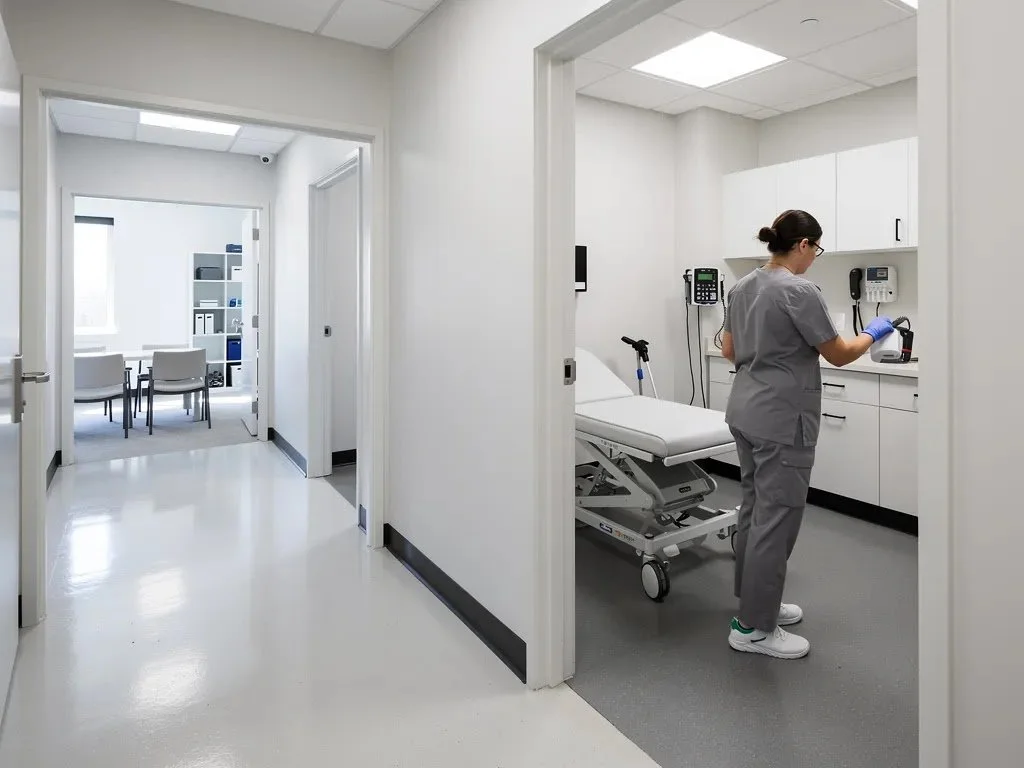
For healthcare administrators overseeing multi-suite medical facilities in North Metro Atlanta, keeping up with environmental infection control standards requires far more than surface-level wiping. A spotless lobby and sterile exam rooms protect patient safety and prevent cross-contamination before pathogens impact your practice reputation.
By reading this breakdown, you'll learn how establishing an optimal frequency for medical office cleaning ensures full compliance with CDC and OSHA guidelines, verifies chemical dwell times, and keeps your clinic audit-ready year-round.
High-risk vs. low-risk zones in outpatient healthcare facilities
Outpatient medical facilities in Cumming, GA, reduce cross-contamination and control janitorial costs by dividing floor plans into three distinct risk tiers that govern daily versus weekly disinfection frequency. Not every square foot of an outpatient healthcare center carries the same infection risk. Treating administrative offices with the same cleaning intensity as an active exam room wastes financial resources, while treating exam rooms like standard corporate offices exposes patients and clinical staff to cross-contamination risks.
To build an efficient janitorial schedule, Live Oak Commercial Cleaning utilizes a clinical risk tiering framework to group building areas into distinct operational zones based on environmental infection control standards.
High-traffic medical suites in Forsyth County, including urgent care centers, pediatric practices, and physical therapy clinics, require targeted daily protocols for Tier 1 and Tier 2 spaces. On the other hand, Tier 3 administrative spaces maintain hygiene standards through lighter daily sweeps combined with weekly deep sanitation.
What must be cleaned daily in a medical office?
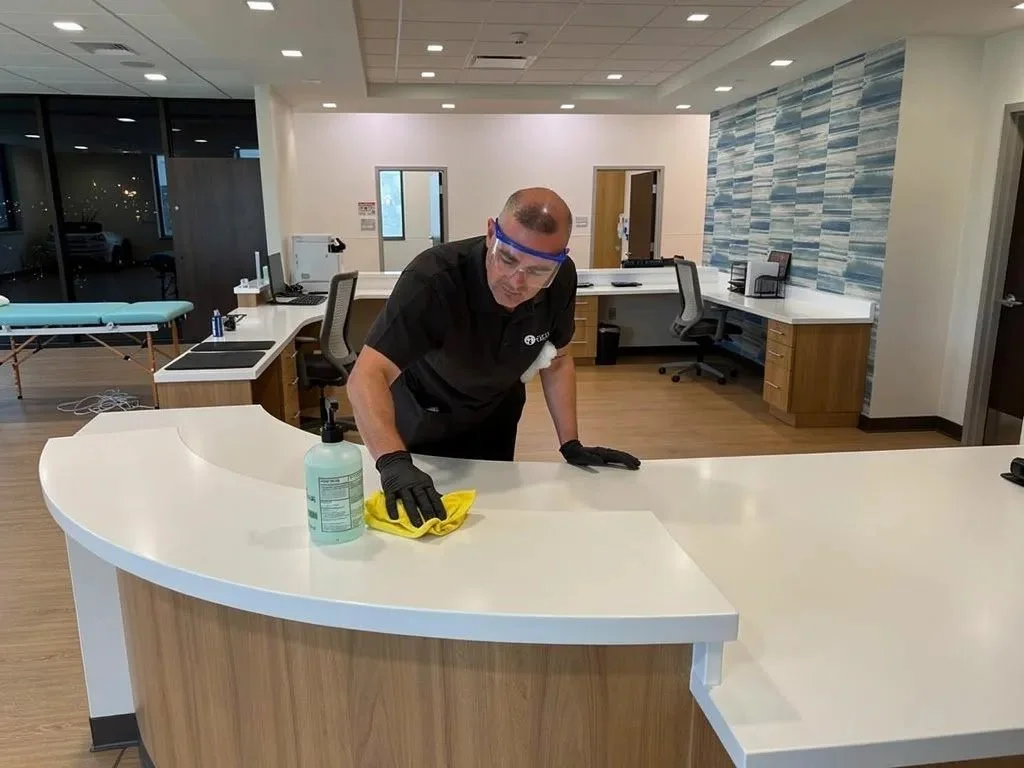
Daily medical office janitorial programs must prioritize high-touch patient zones, including reception desks, exam tables, triage counters, and restrooms, using hospital-grade disinfectants to neutralize pathogens deposited during daily clinic hours. Consistent night-crew sanitization forms the foundation of infection control in clinical environments across North Metro Atlanta. Pathogens deposited on high-touch surfaces during morning appointments can survive for hours or days if left untreated by professional cleaning crews.
According to CDC guidelines,the routine daily cleaning and disinfection of high-touch surfaces is a necessary practice for reducing indirect healthcare-associated infection risks. The guidelines emphasize distinguishing between cleaning and disinfection to effectively manage environmental reservoirs of pathogens.
Daily tasks for clinical and patient zones
Daily clinical sanitization mandates evening disinfection of exam tables, sink faucets, door handles, check-in kiosks, and restrooms using EPA-registered broad-spectrum virucides.
Sanitize reception and waiting areas: Wipe check-in counters, touchscreens, clipboard surfaces, and pens with EPA-registered disinfectants. Disinfect hard-surface seating, armrests, and door handles every evening, and vacuum entry carpets using HEPA-filtration equipment to trap fine dust and outdoor pollen.
Decontaminate exam rooms and treatment bays: Clean and disinfect examination tables using non-corrosive, broad-spectrum virucides. Wipe counter surfaces, sink faucets, hand sanitizer dispensers, and stool seats. Empty trash cans and replace liners using proper protective gear following OSHA bloodborne pathogens standards.
Disinfect restrooms thoroughly: Scrub and sanitize toilets, urinals, flush valves, and partition latches. Clean mirrors, vanity counters, and soap dispenser pumps. Mop floors with hospital-grade disinfectant solutions using Live Oak's 4-color microfiber zoning system mop heads that never leave the restroom.
Tasks best reserved for weekly and monthly schedules
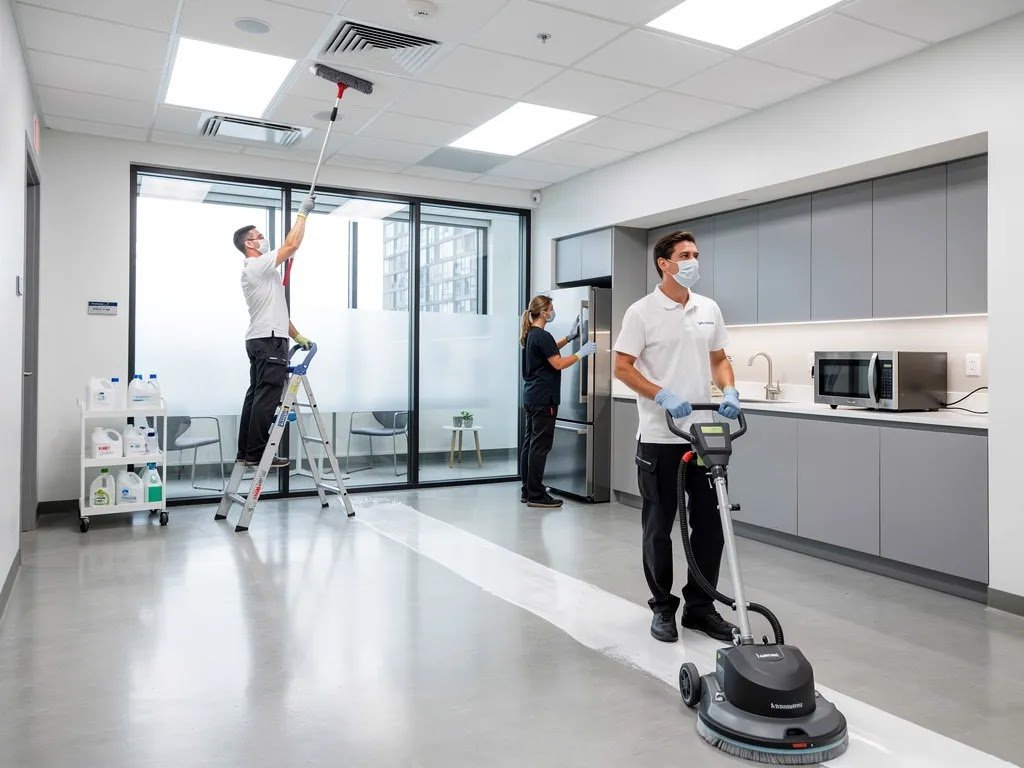
Deep facility maintenance tasks, such as hard-floor machine scrubbing, high-vent dusting, full interior window washing, and breakroom appliance detailing, are optimal for weekly and monthly rotations to manage labor costs without sacrificing sanitation. Cleaning every deep maintenance area daily drives up costs unnecessarily. Structuring specialized floor care, window washing, and high-level dusting into weekly or bi-weekly rotations maintains high facility standards without inflating nightly service hours.
Weekly deep cleaning priorities
Weekly healthcare deep cleaning focuses on removing ground-in floor grit through machine scrubbing, clearing ceiling air return vents to preserve air quality, and sanitizing staff breakroom appliances.
Scrub hard-surface floors: Heavy patient foot traffic leaves abrasive grit that dulls protective floor finishes. Machine scrub tile and luxury vinyl plank flooring weekly to remove ground-in dirt in Cumming medical offices.
Clear ceiling air return vents: Dust gathers on ceiling diffusers, supply vents, and door frames over time. Clean these areas weekly to stop circulating dust before it affects indoor air quality.
Detail staff breakrooms: Clear trash and counters daily, and schedule weekly service to wipe down refrigerator interiors, microwave walls, cabinet fronts, and under-counter storage.
For practices looking to streamline building maintenance alongside routine cleaning schedules, exploring specialized commercial janitorial programs in Cumming helps combine floor care, janitorial supply reordering, and light repairs under one management contract.
Factors that determine your ideal cleaning frequency
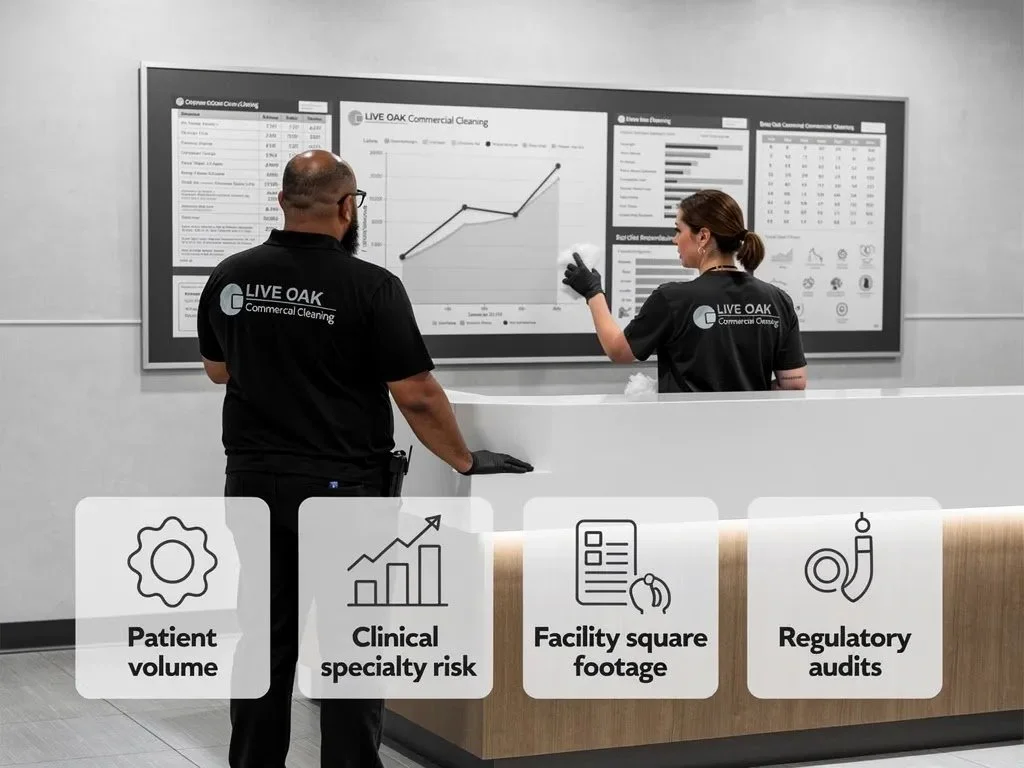
A clinic's ideal janitorial schedule depends on four primary operational variables: daily patient volume, clinical specialty risk, total building square footage, and regulatory audit compliance requirements. Every medical practice in Forsyth County operates under unique conditions. When customizing a janitorial schedule for a local clinic, Live Oak Commercial Cleaning evaluates these key site parameters:
1. Patient volume and appointment density
High-volume outpatient practices seeing over 30 patients daily require mandatory evening janitorial service, while low-volume administrative suites can maintain standards with 3-day-a-week cleaning schedules. A specialty clinic seeing 15 scheduled patients per day accumulates significantly fewer surface contaminants than an urgent care center seeing 80 walk-in patients daily. Higher foot traffic demands daily evening janitorial service to maintain baseline hygiene
2. Clinical specialty and patient vulnerability
Pediatric, oncology, and urgent care practices demand daily specialized sanitization due to higher surface contact rates and immunocompromised patient populations. In pediatric suites, children touch lower wall surfaces, floor areas, and furniture constantly, requiring daily floor mopping and wall spot cleaning. Specialty surgical and diagnostic suites require strict compliance with EPA List N disinfectant dwell times to protect vulnerable patients.
3. Facility footprint and floor plan layout
Multi-story commercial medical buildings achieve maximum cost efficiency by scheduling daily care for ground-floor lobbies and patient restrooms while rotating upper-floor administrative offices on alternate days. Multi-story medical office buildings in Cumming often benefit from hybrid scheduling. High-traffic ground-floor lobbies, elevators, and patient restrooms receive daily attention, while upper-floor administrative suites follow a three-day-per-week schedule.
4. Regulatory and audit schedules
Healthcare facilities preparing for health department inspections or AAAHC accreditation maintain daily digital janitorial logs to verify environmental infection control compliance. Clinics subject to periodic health department inspections or AAAHC accreditation audits maintain consistent daily digital logs to verify environmental cleaning compliance.
Evaluating chemical dwell times and infection control protocols
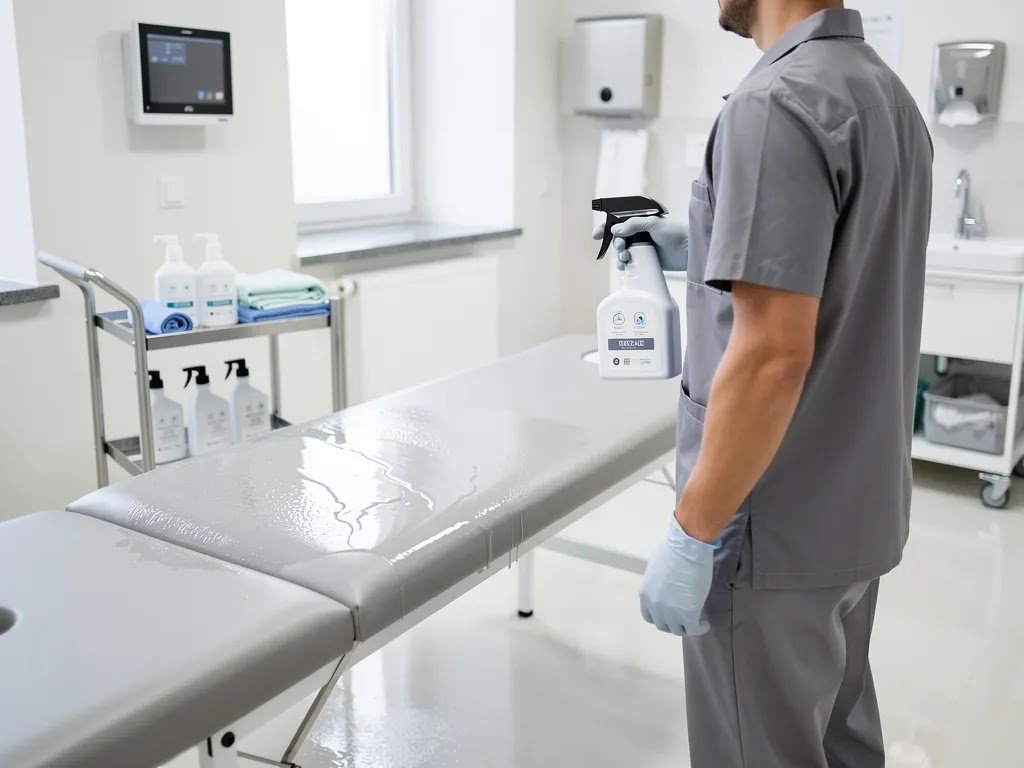
Chemical dwell time, the required wet-contact duration ranging from 2 to 10 minutes, is the critical technical factor determining whether a hospital-grade disinfectant successfully eliminates surface pathogens. A cleaning schedule is only as effective as the technical execution behind it. Simply wiping a surface with a wet cloth doesn't guarantee disinfection if chemical guidelines are ignored.
Under Live Oak's chemical dwell-time compliance protocol, disinfectants must remain wet on surfaces for specific time periods to eliminate pathogens effectively. Rushing through nightly routines prevents products from achieving full efficacy.
Professional cleaning technicians verify product specifications listed in the EPA List N disinfectant portal to ensure chemical contact times match pathogen elimination targets.
How single-source vendor management improves schedule execution
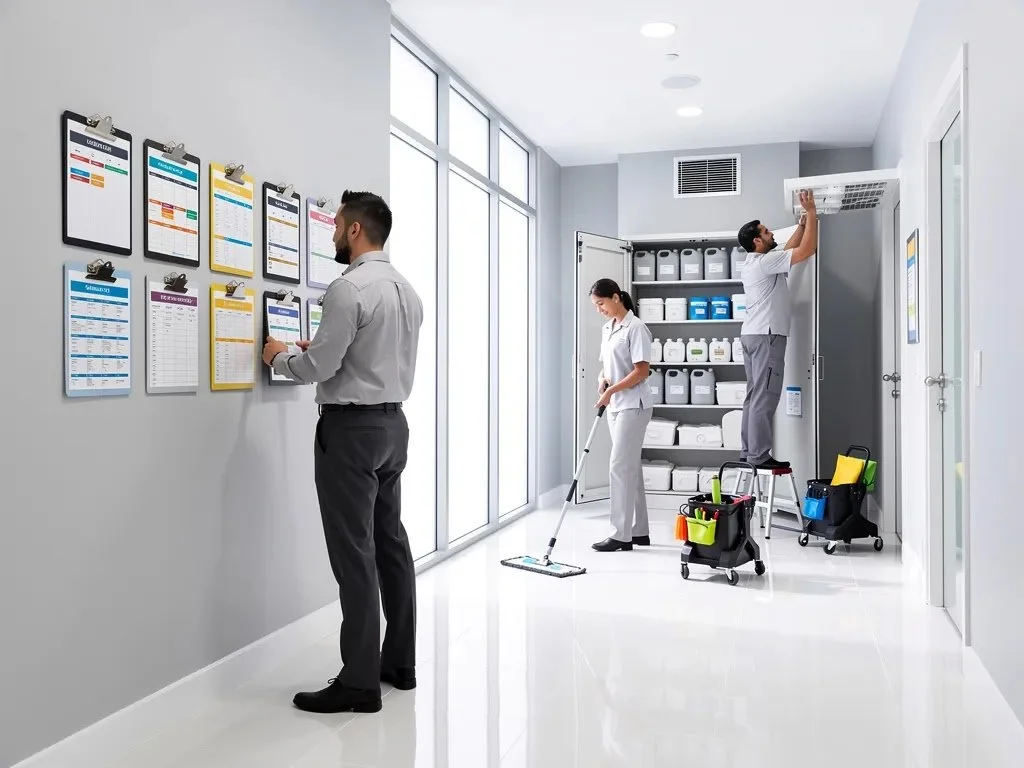
Partnering with a single commercial vendor for janitorial cleaning, floor care, supply reordering, and light facility repairs eliminates vendor sprawl and reduces administrative oversight for practice managers. Managing separate contracts for cleaning, floor waxing, window washing, and handyman fixes creates unnecessary operational friction for clinic managers across North Metro Atlanta.
Under Live Oak's single-source facility model, working with one dedicated commercial partner provides clear operational advantages:
Maintain consistent building standards: The same trained team handles both daily cleaning and periodic deep maintenance, ensuring no detail is overlooked.
Simplify monthly invoicing: Consolidated monthly ACH billing eliminates multiple vendor payments and administrative tracking headaches.
Deliver responsive facility care: Combining routine janitorial work with light maintenance, such as swapping stained ceiling tiles or replacing burnt-out light bulbs, keeps your facility operating smoothly.
Build a reliable cleaning schedule for your medical practice
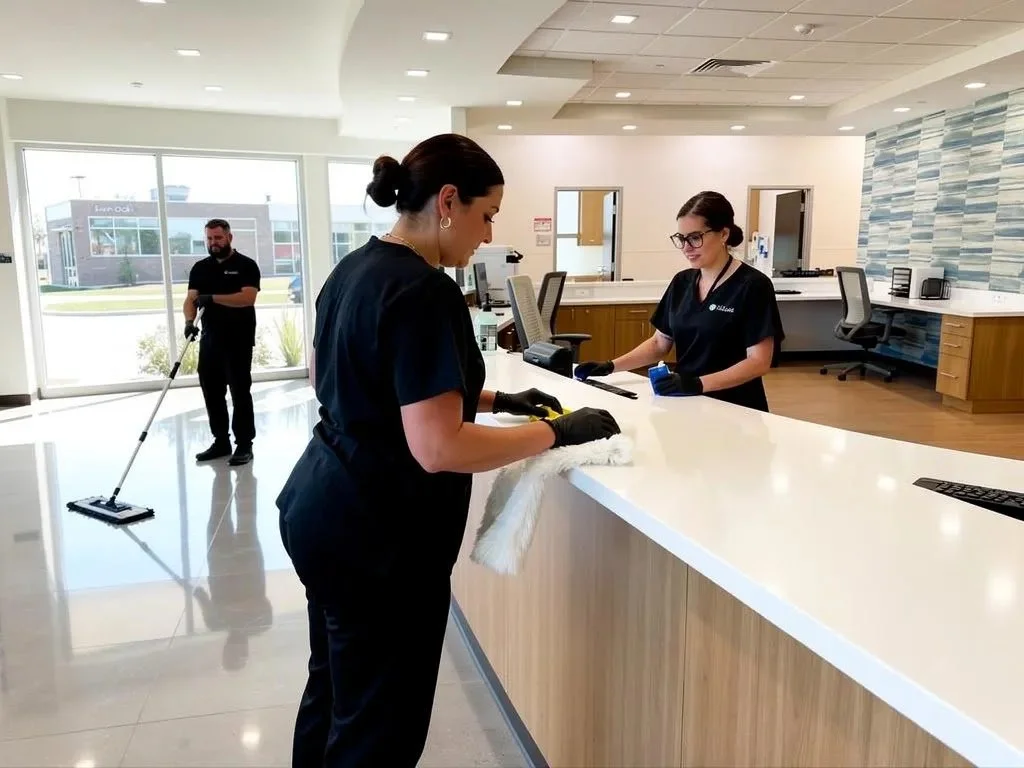
Live Oak Commercial Cleaning creates customized daily and weekly janitorial programs that balance clinical infection control with predictable monthly budgeting for Cumming healthcare facilities. Establishing the right balance between daily sanitization and weekly deep maintenance protects patient health, satisfies regulatory audits, and extends your building's surface lifespan.
Live Oak Commercial Cleaning provides customized janitorial programs, hard-surface floor care, and facility maintenance support for medical practices across North Metro Atlanta. Contact our local team to review your building's layout and schedule a customized facility audit.
About the Author
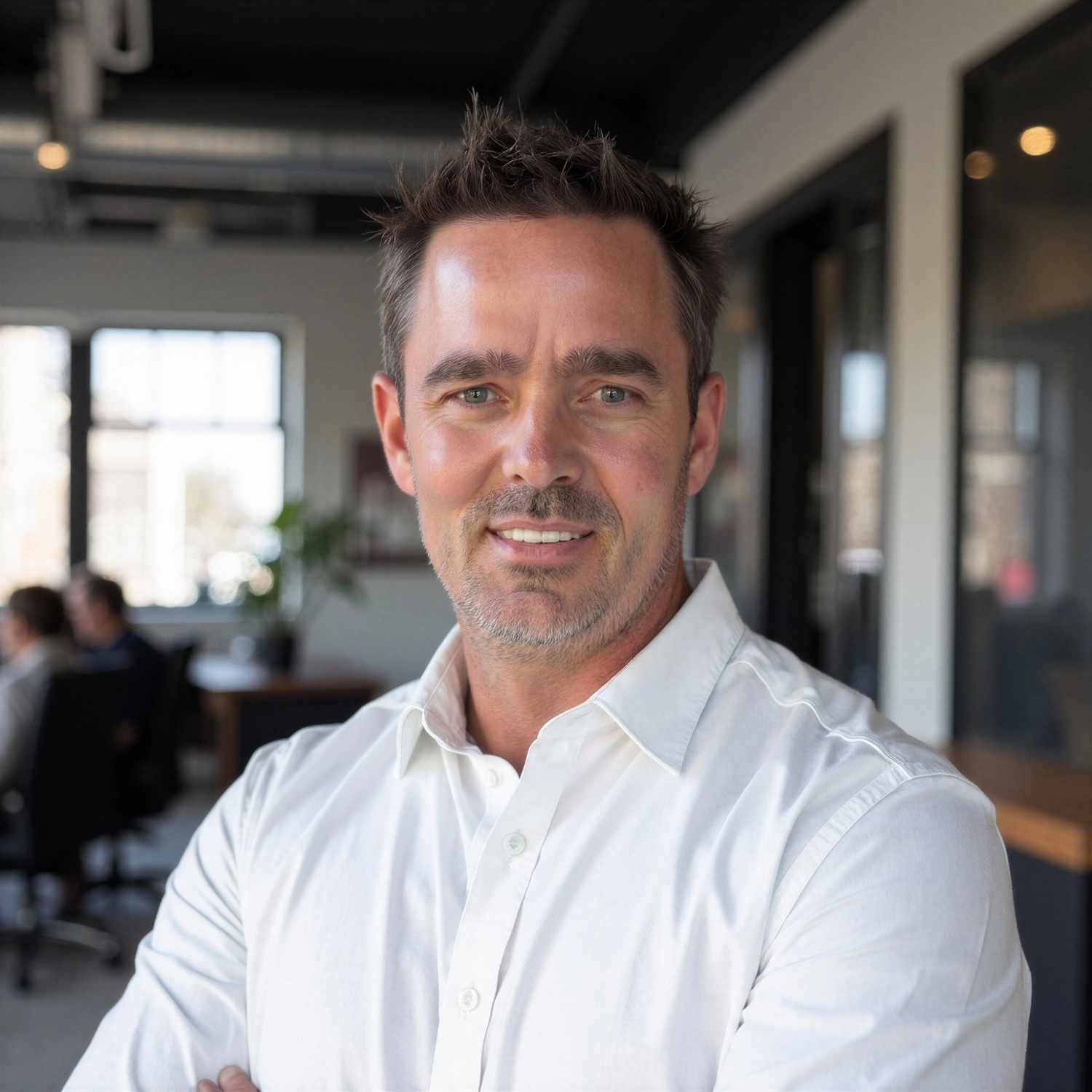
Micah Purvis is the founder and operational lead of Live Oak Commercial Cleaning, specializing in commercial janitorial programs and healthcare facility maintenance in Cumming, GA. Based in Cumming, Georgia, Micah oversees commercial janitorial operations, healthcare facility sanitation programs, and multi-service maintenance solutions for businesses and medical practices across North Metro Atlanta.