
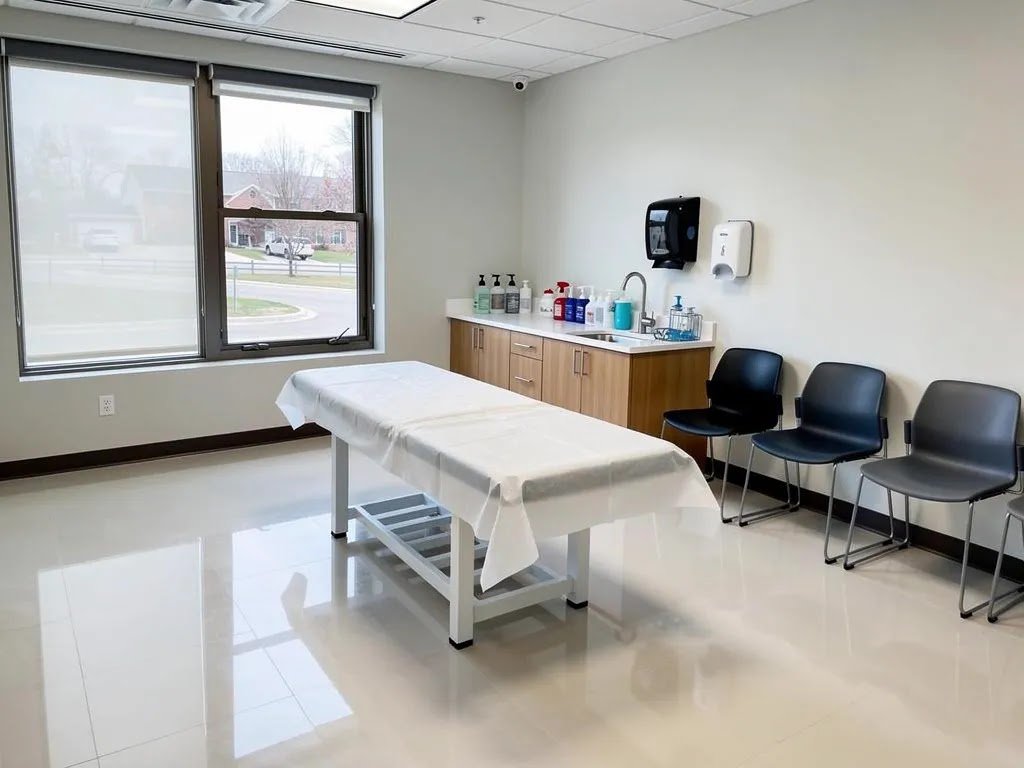
For clinical managers and practice administrators, environmental hygiene is a daily operational priority. Outpatient suites, physical therapy centers, and dental offices process dozens of vulnerable patients each day. This steady traffic creates contamination pathways that unsupervised janitorial crews frequently miss. In this guide, you will discover five hidden microbial reservoirs in outpatient settings, learn how to audit chemical contact times, and find out how specialized medical office cleaning from Live Oak Commercial Cleaning Solutions keeps non-surgical healthcare facilities audit-ready year-round.
Evaluating environmental hygiene in non-surgical healthcare facilities
Clinical practice managers must balance rapid room turnover with strict infection prevention standards. Outpatient facilities process steady patient traffic throughout the day. Pathogens like Staphylococcus aureus, norovirus, and influenza settle quickly on exam tables, waiting room chairs, and intake counters.
According to the CDC Guidelines for Environmental Infection Control in Healthcare Facilities, high-touch housekeeping surfaces near patient care areas carry elevated transmission risks and require EPA-registered hospital disinfectants paired with thorough mechanical cleaning.
When general janitorial contractors treat clinical spaces like standard commercial offices, practice managers face compliance liabilities, failed inspections, and patient safety risks.
The five critical gaps in outpatient cleaning programs
Spotting where daily cleaning routines break down helps practice administrators eliminate infection vectors before they trigger compliance citations or patient complaints.
1. The spray-and-wipe mistake (dwell time non-compliance)
Applying an EPA-registered disinfectant fails to neutralize pathogens if the surface is dried before the required contact window passes.
Untrained cleaners rush by spraying a surface and wiping it dry immediately. This habit stops the chemical action before it kills target microbes. Disinfectants require continuous surface moisture to penetrate cell walls and neutralize viruses.
Contact time requirements: Most hospital-grade disinfectants require 3 to 10 minutes of uninterrupted wet contact to achieve full sanitization.
Premature drying: High indoor airflow or low humidity can cause chemicals to evaporate too quickly, requiring a second application to maintain compliance.
Under the OSHA Bloodborne Pathogens Standard 29 CFR 1910.1030, surface decontamination must strictly follow the product's EPA master label. Wiping surfaces dry early provides a false sense of security while leaving pathogens active on patient tables and counters.
2. Microfiber cross-contamination across clinical zones
Reusing the same cleaning cloth between restrooms, waiting rooms, and clinical treatment areas spreads contaminants across the facility.
Without strict color-coded containment, cleaning tools carry bacteria from room to room. A cloth used on a waiting room end table should never touch an exam room counter.
Color-coded microfiber isolation protocol
Red microfiber: Dedicated exclusively to restrooms, toilets, urinals, and sanitary utility fixtures.
Yellow microfiber: Reserved for clinical exam rooms, treatment tables, and vital testing bays.
Blue microfiber: Used only in reception desks, waiting areas, and administrative offices.
Green microfiber: Assigned to staff breakrooms, kitchenettes, and consultation spaces.
Live Oak environmental service technicians enforce an 8-fold microfiber folding protocol with dedicated zone buckets on every visit. Once each side of a folded cloth touches a surface, the cloth goes directly into a sealed laundry container and is never dipped back into a clean chemical solution.
3. Exam table crevices and worn vinyl upholstery
Microscopic cracks in worn exam table vinyl and unsealed dispenser brackets harbor bacteria that survive routine surface wiping.
Exam tables see continuous patient contact throughout the day. While clinical staff change table paper and wipe down the center vinyl between appointments, bio-burden builds up in three neglected areas:
Underneath table rails: Grip points used by patients when shifting position or sitting up.
Paper roll brackets: Metal pivot pins that collect dust, skin cells, and dried chemical residue.
Seams and stitching: Micro-fissures in aged vinyl where fluids penetrate the foam core below.
Once internal foam is compromised, surface wiping cannot disinfect the table interior. Dedicated on-site supervisors inspect table seams and hardware during routine quality walkthroughs to flag vinyl wear before audits. Scheduling periodic specialized commercial deep cleaning ensures table frames, stirrup tracks, and adjustment handles are thoroughly scrubbed and sanitized.
4. Digital check-in kiosks and front-desk input devices
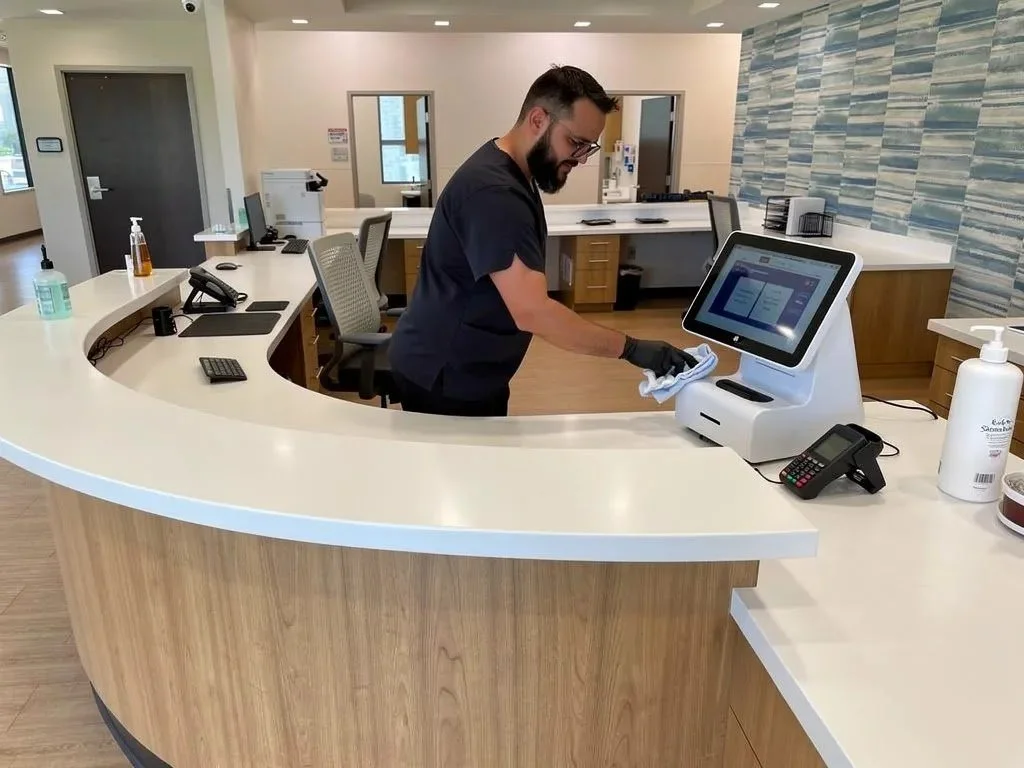
Touchscreens, signature pads, and keyboards in registration areas receive constant handling from sick patients, yet cleaners often skip them to avoid damaging sensitive electronics.
Patient check-in hardware carries significant bacteria and viruses. Because staff worry about shorting out electronic components with liquid sprays, these high-touch devices are often neglected during evening janitorial passes.
Front-desk and clinical hardware must be clearly defined in your daily cleaning scope using electronics-safe, pre-saturated disinfectant wipes rather than bulk pump spray bottles.
5. Particulate buildup on return air grilles
Air return grilles and ceiling vents in exam suites collect dust and lint that can dislodge during HVAC startup cycles, contaminating clean prep areas below.
When return vents accumulate dust, air circulation slows and room air quality drops. More critically, heavy buildup on ceiling vents can flake off when the ventilation system kicks on, dropping visible particles directly onto clean supply tables and exam counters.
Consolidated facility cleaning scopes include scheduled quarterly HEPA vacuuming of all return vents and ceiling louvers, followed by an EPA-registered disinfectant wipe-down to prevent dust and microbial colonization on vent surfaces.
Establishing an audit-ready quality framework
Keeping a medical practice clean requires moving past visual inspections to measurable hygiene standards. Practice managers across North Georgia rely on Live Oak's documented cleaning logs, on-site supervisory check-ins, and consistent audit readiness to maintain clinical compliance.
For outpatient facilities and medical offices seeking professional janitorial services in Cumming and across Forsyth County, dedicated healthcare cleaning teams provide audit-ready documentation and consistent sanitization standards.
Daily clinical cleaning cadence
Morning operational readiness: Verify exam paper rolls are stocked, soap and sanitizer dispensers are filled, and counters are dry with no chemical film.
Mid-day high-touch sweeps: Wipe down waiting room armrests, check-in kiosks, and public restroom fixtures during mid-day scheduling lulls.
Evening terminal clean: Complete 4-color microfiber zoning passes, full-dwell surface disinfection, and neutral floor cleaning across all suites.
Quantitative hygiene benchmarks (ATP testing)
Adenosine triphosphate (ATP) surface swab testing provides an objective, immediate reading of surface cleanliness, measured in Relative Light Units (RLU). Use these standard clinical thresholds to verify whether your cleaning vendor is truly sanitizing your facility:
Practical quality control steps
Verify chemical labels: Confirm all products have active EPA registration numbers suited to your clinic's specific pathogen risks.
Post clear dilution charts: Keep simple chemical ratio and dwell-time guides inside janitorial supply closets for quick technician reference.
Run spot audits: Conduct monthly swab checks on high-touch surfaces to ensure your cleaning team meets target RLU standards.
Elevate your facility cleanliness standards
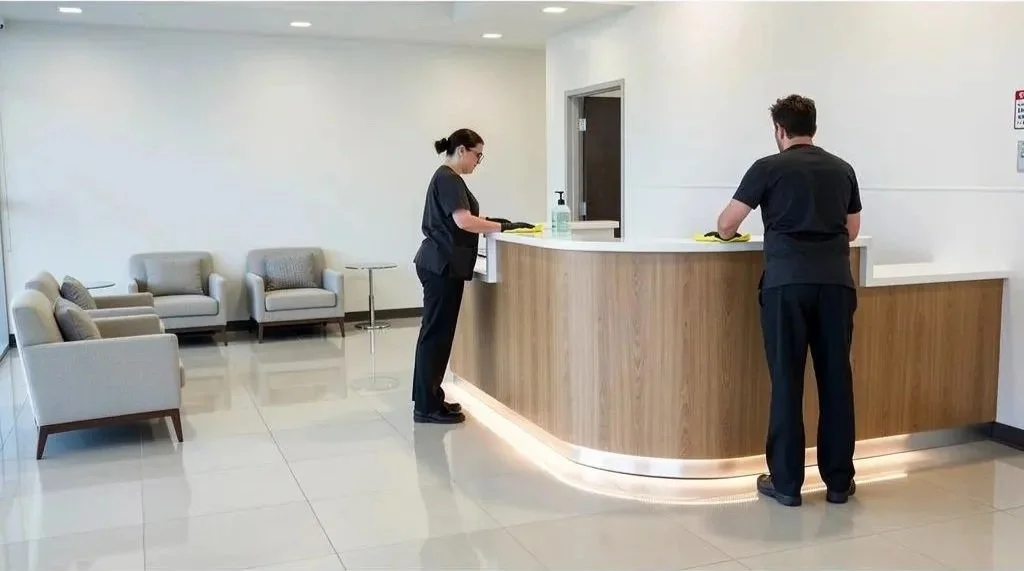
Infection control breakdowns in outpatient settings usually stem from simple process shortcuts like skipped dwell times and cross-zone cloth reuse. By enforcing proper contact windows, color-coded cloth zoning, safe electronics care, and clear ATP testing standards, practice managers can protect both patient health and clinic compliance.
Partner with a dependable, healthcare-trained cleaning team backed by on-site supervision, background-checked crews, and a clear satisfaction commitment. Contact Live Oak Commercial Cleaning Solutions to evaluate your current cleaning plan and establish a reliable sanitization schedule for your medical facility.
Request a customized medical cleaning proposal
About the Author

Micah Purvis is the Founder and Operations Director of Live Oak Commercial Cleaning Solutions, serving commercial facilities, clinical offices, and professional suites across North Metro Atlanta. With deep expertise in commercial cleaning protocols, vendor consolidation, and healthcare facility standards, Micah designs comprehensive cleaning scopes that keep facilities audit-ready and operationally sound.